Are you looking for an easy homeschool phonics curriculum? If you’re teaching your first grader to read at home… congrats! You’re stepping into one of the most important and rewarding roles a parent can take on.
If you aren’t sure where to start, take a deep breath. You’ve got this. A simple plan, a little patience, and a great homeschool phonics curriculum can make teaching your child to read both fun and successful.
So, Where Do You Start with Homeschool Phonics?
Phonics is the foundation of early reading—and it’s especially important when you’re homeschooling. While some children may pick up reading through exposure to books and language, research shows most young learners benefit from explicit, systematic phonics instruction.
In first grade, kids move beyond letter-sound recognition and begin working with word patterns, vowel combinations, and spelling rules. That’s where a solid homeschool phonics plan comes in.
Before diving into a first-grade reading curriculum, your child should already have a strong grasp of letter names and sounds. They don’t need to know all of them perfectly, but they should be familiar with most. If your child is still learning letters and sounds, you can begin teaching CVC (consonant-vowel-consonant) words while continuing to review the basics.
Here’s a quick look at typical first grade phonics skills your child will encounter during your homeschool lessons:
- Short vowel sounds a, e, i, o, and u (like cat, pen, hug)
- Beginning and ending blends and digraphs (e.g., sh, ch, bl, gr)
- Long vowels with silent e (cake, bike)
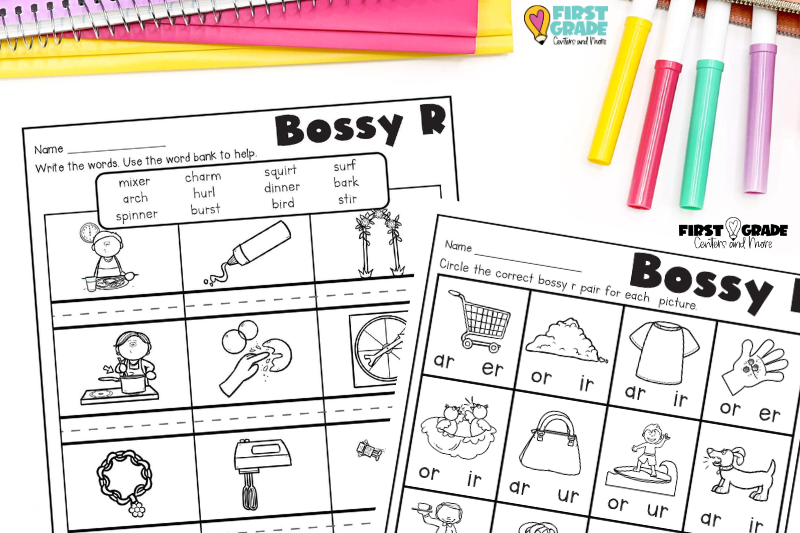
- R-controlled vowels (ar, er, or)
- Vowel teams (ea, ai, ee, oa)
- Vowel diphthongs (oi, oy, ow)
- Two-syllable words with -le endings
- Basic two-syllable word patterns and common endings
If that list feels long—don’t worry! These skills are introduced gradually, and your child doesn’t need to master them all at once. The key to homeschool phonics success is consistency and meaningful practice.
What Does Homeschool Reading Practice Look Like?
When you’re working with your child at home, keep your phonics sessions short, positive, and interactive. Here are a few ideas to support your homeschool phonics routine:
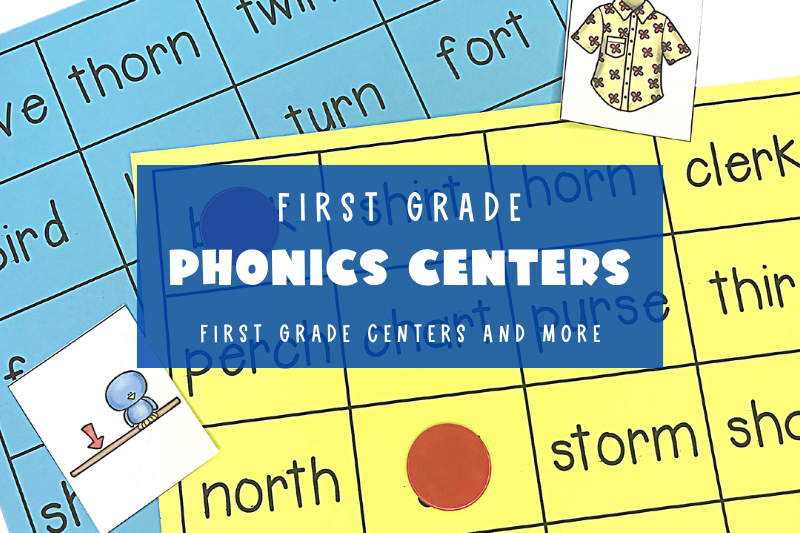
- Make it multisensory. Use magnetic letters, whiteboards, cut-and-paste activities, and decodable books to keep learning hands-on.
- Review and repeat. Young readers need plenty of repetition to build fluency and confidence.
- Read together. Keep reading aloud to your child and let them read words or phrases that match your phonics focus.
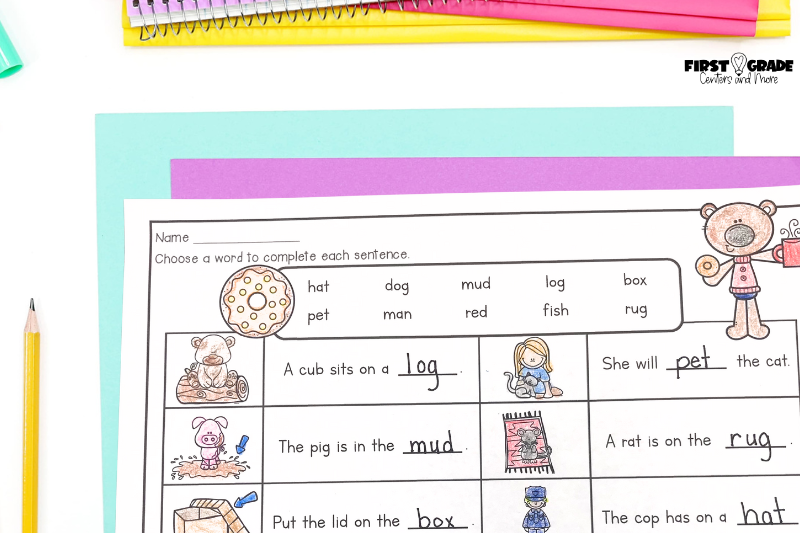
- Use easy-to-follow tools. Simple worksheets with clear directions allow your child to practice independently while reinforcing your homeschool instruction.
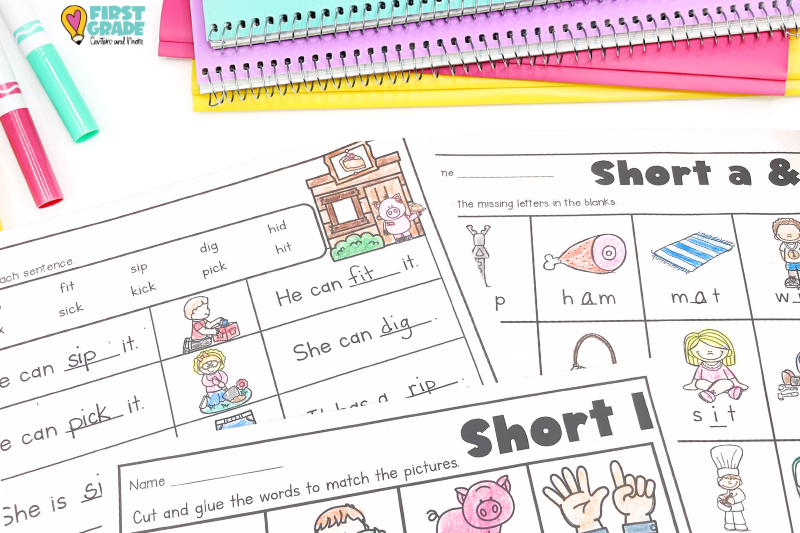
My Favorite Homeschool Phonics Resource
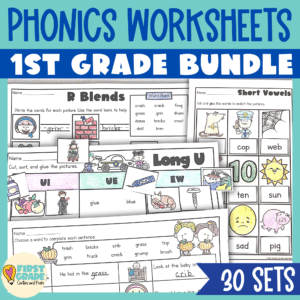
Looking for an easy-to-use curriculum to guide your homeschool phonics journey? My Cut and Paste Phonics Worksheets are a great place to start!
These worksheets include:
- Over 300 pages of interactive, skill-based phonics practice
- 30 targeted first-grade phonics skills taught in a research-backed sequence
- Hands-on activities like sorting, cutting, writing, and reading
Use 1–2 worksheets each day, spending 1–2 weeks on each skill. Everything is ready to print—just open and go!
➡️ Click here to check out the Cut and Paste Phonics Worksheets!
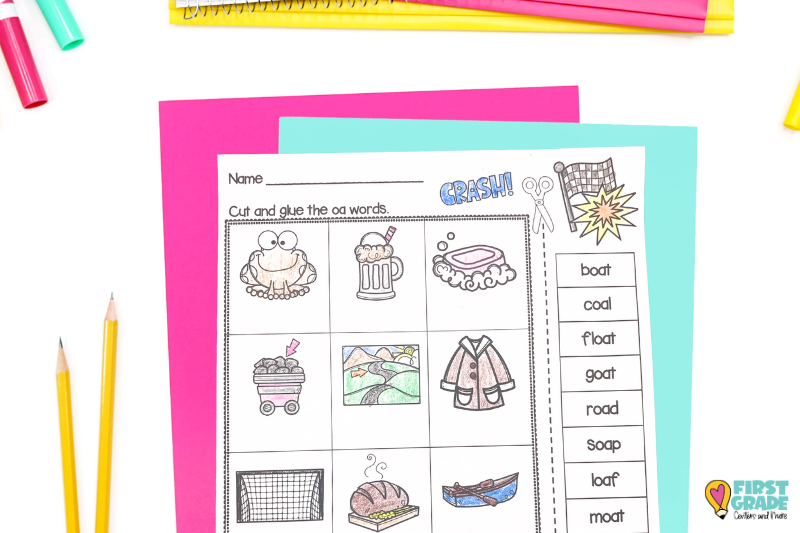
Add Decodable Reading to Your Homeschool Phonics Lessons
Another powerful way to build reading skills is through decodable reading passages. These texts use only the phonics patterns your child has learned, so they can apply their knowledge right away. That success builds both confidence and fluency.
Want to learn how I use decodable texts in my classroom and at home? Read more here.

Final Encouragement for Homeschool Families
If you’re feeling unsure, remember this: You are your child’s first teacher. Every minute you spend helping them practice is a step toward building a lifelong love of reading.
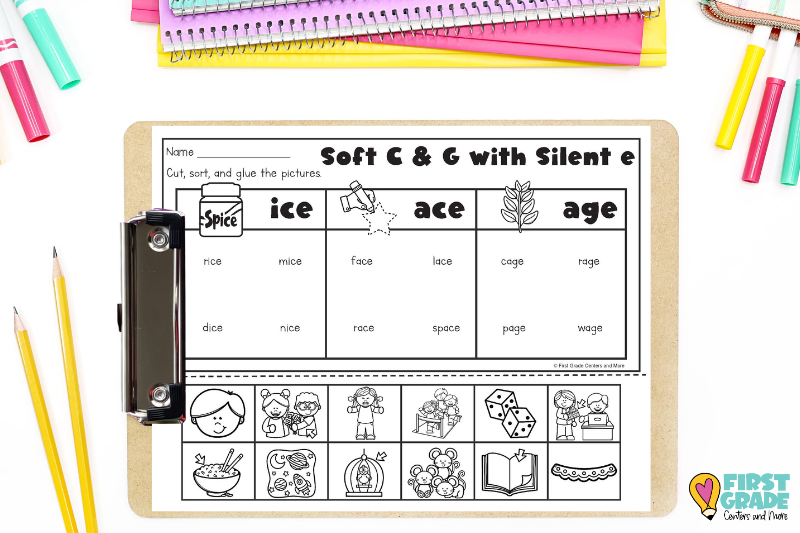
The homeschool phonics journey doesn’t need to be perfect—it just needs to be consistent. A few minutes a day adds up fast.
You’ve got this!
You can grab these phonics worksheets on TPT!